History Of Mechanical Organs · Volume 7
Decline, Preservation & the Modern Revival
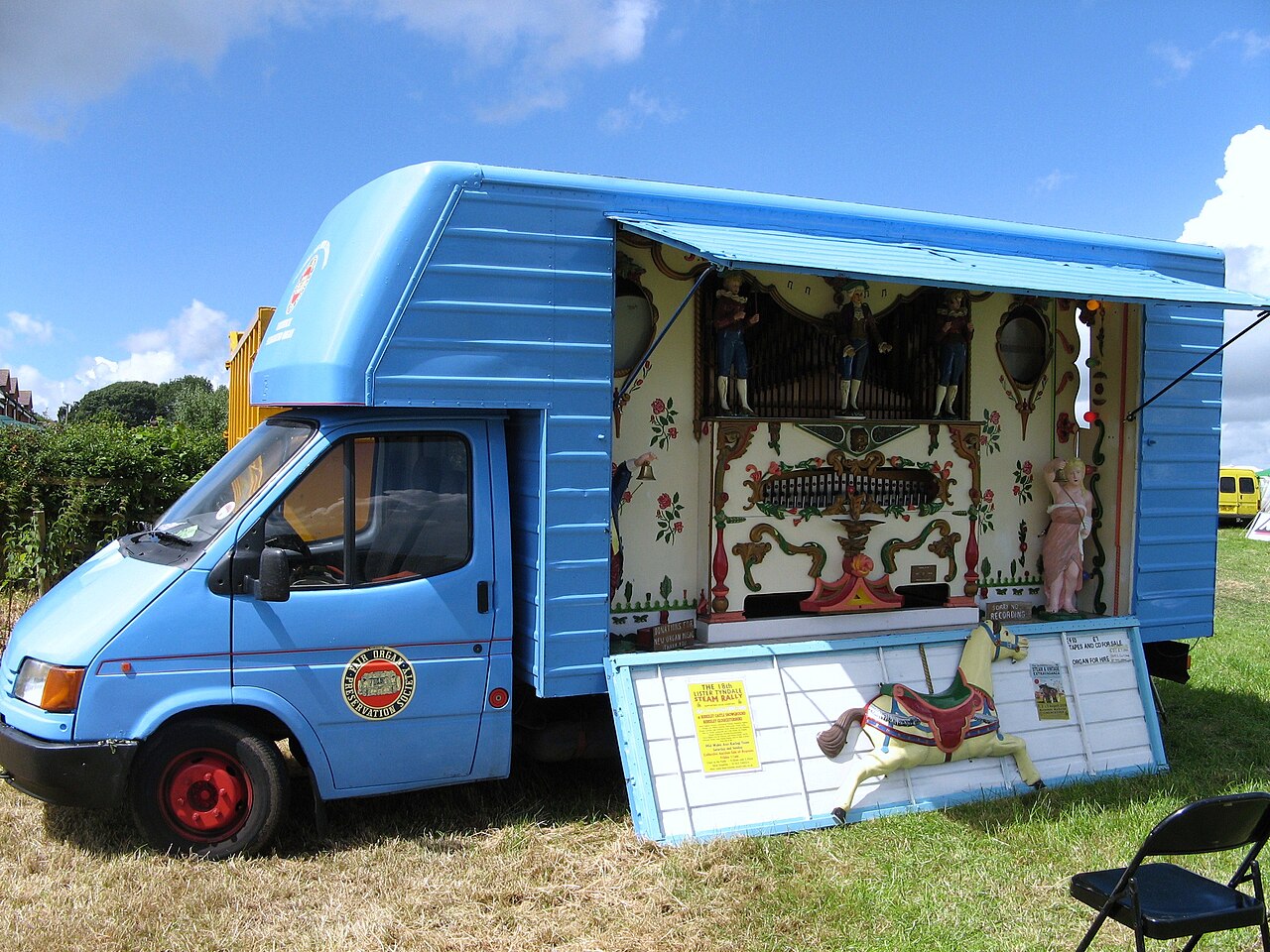
The self-playing organ was not killed by neglect or by any fault of its own. It was killed by better machines for the one job it had quietly monopolised for two centuries: putting music into a room without a musician. Between roughly 1920 and 1940 three inventions — radio broadcasting, the electrically recorded gramophone, and sound-on-film — took that job away so completely that the great firms of Paris, Antwerp, Waldkirch, Freiburg and North Tonawanda were, within a single generation, either bankrupt, converted to other trades, or reduced to repair work. The instruments themselves, suddenly worth less than the scrap brass and lead in their pipes, were broken up in their thousands.
This volume tells the second half of that story as well: how a scattering of collectors, and then a set of durable societies and museums, pulled the survivors back from the skip; how a handful of small workshops kept the actual craft of organ-building alive rather than merely embalming its products; and how, at the end of the century, an amateur design and the internet turned a dying professional trade into a living hobby that anyone with a workbench could enter. That last turn is the one this whole Mechanical Organs program grows out of, and the volume closes by placing the program in it. The golden-age makers and their instruments belong to Vol 5 and Vol 6; here the subject is the fall, the rescue, and the rebirth.
7.1 The fall: three machines that made the organ redundant
The mechanical organ’s entire commercial value rested on a single proposition — a fixed capital instrument that reproduced a full ensemble on demand, forever, without wages. For the dance hall, the fairground, the café, the skating rink and the silent cinema, that proposition was unbeatable for as long as the alternative was hiring live players. Three technologies, arriving in quick succession, destroyed it not by competing on price but by changing the terms entirely (Bowers, Encyclopedia of Automatic Musical Instruments, 1972).
Radio broadcasting (from c. 1920). Regular public broadcasting began with stations such as KDKA Pittsburgh in 1920 and the BBC in 1922, and within a decade a receiver was a normal domestic and commercial fixture. A café or bar that had once needed an orchestrion for background music could now get an entire orchestra, changing programme through the evening, for the price of a wireless set and a licence. The orchestrion’s fixed roll library, however large, could not compete with a medium that delivered fresh, professionally performed music continuously and for almost nothing.
The electrically recorded gramophone (from c. 1925). Acoustic recording had existed since Edison’s 1877 phonograph, but it was thin and quiet. The introduction of electrical recording using microphones and valve amplification around 1925 transformed the disc into a genuinely high-fidelity, loud, cheap and endlessly re-pressable carrier of any performance. The reproducing piano and the orchestrion — whose whole selling point had been “a real performance in your home” — were outclassed overnight by a machine that reproduced the actual sound of the actual performer, not a mechanism re-enacting the notes.
Sound film — the “talkies” (from 1927). The most abrupt casualty was the photoplayer, the organ-and-percussion machine built to accompany silent films (Vol 6). The commercial release of synchronised sound with The Jazz Singer in 1927, and the near-total conversion of cinemas to sound by about 1929–30, made the photoplayer obsolete in the space of two or three years. Thousands of instruments installed in the early 1920s were, before the decade was out, dead weight; many were simply ripped out and scrapped.
The Depression and the war finished the work. A market already collapsing under radio, disc and film had no reserve to survive the Great Depression from 1929 or the Second World War. Firms that might have limped on as luxury or novelty builders lost their remaining custom; skilled workforces dispersed; premises were requisitioned or bombed. Metal drives during the war swallowed pipework and mechanism for scrap. By 1945 the trade that had employed hundreds across Europe and America was, as a commercial concern, effectively extinct, and a great many instruments had gone with it. What survived did so largely by accident — too big to move, forgotten in a barn, kept for sentiment — and it is those accidental survivors that the revival was built on.
7.2 The rescue: collectors and the preservation societies
The recovery began not with institutions but with individual collectors in the late 1940s and 1950s, buying up instruments that owners were glad to be rid of, often for little more than haulage. Two things then turned private hoarding into a durable preservation movement: the founding of membership societies that pooled knowledge, arranged events and published journals, and the creation of museums that put the instruments permanently before the public and playing.
7.2.1 The Musical Box Society International (MBSI), 1949
The oldest of the enduring bodies is American. What became the Musical Box Society International was founded on 15 October 1949 at the home of Dr and Mrs Byron Merrick in Berlin Heights, Ohio, initially as the Musical Box Hobbyists; it grew to 49 members in its first year and adopted the international name in 1953 (MBSI, “History”, mbsi.org). Though its name centres on the musical box, the society’s remit is explicitly all automatic musical instruments — fairground organs and room-sized orchestrions included — and its journal Mechanical Music and regional chapters have been a principal channel of scholarship, restoration know-how and instrument provenance for three-quarters of a century.
7.2.2 The Fair Organ Preservation Society (FOPS), 1957–58
The specifically organ-focused body is British. FOPS traces its origin to 1957, when a handful of enthusiasts gathered around Tom Alberts’ 98-key Marenghi organ at Bolton for Sunday recitals and resolved to form a society; the organisation was formally constituted the following year, and the University of Sheffield’s archive catalogue records it as “established 1957” (fops.org, “Introduction”; Sheffield University Library archives). This corrects a date that circulates widely as FOPS’s founding — 1963; the primary sources place it in 1957–58, and 1963 appears to be a conflation with the founding that year of the Musical Museum at Brentford (below). FOPS grew quickly on the back of the post-war steam-rally movement, which gave preserved fairground organs a public stage; its journal The Key Frame remains a standard reference, and its early membership rolls capture how international the little world already was — its first overseas member was the Amsterdam organ-builder Gijsbert Perlee, and its first American member the automatic-music historian Q. David Bowers himself (fops.org).
7.2.3 COAA, and the Dutch draaiorgel societies
In the United States the Carousel Organ Association of America (COAA) was founded in the late 1990s — the association’s own journal marked its tenth anniversary in 2008, placing the founding at about 1997–98 (Ron Bopp, Carousel Organ, COAA). COAA is built around the rally: members bring band organs, carousel organs and small crank organs together to play in public, and its journal Carousel Organ has become the leading English-language periodical for the American band-organ and busker-organ world. In the Netherlands, where the street organ never fully disappeared from civic life, the draaiorgel has been defended by bodies such as the Kring van Draaiorgelvrienden (the “circle of street-organ friends,” active from the mid-1950s), whose members were among the founders of the Utrecht museum.
7.2.4 The museums
Museums fixed the survivors in permanent, playing collections. In Utrecht, an exhibition mounted in 1956 — From Musical Box to Barrel Organ, drawing more than 14,000 visitors in eight days — led the city to fund a permanent museum, opened in 1958 as the Nationaal Museum van Speeldoos tot Pierement; it moved to the medieval Buurkerk in 1984 and now trades as Museum Speelklok, holding one of the world’s great collections of self-playing instruments, including the large Dutch street organs (museumspeelklok.nl, “History”). In Britain, Frank Holland founded what is now the Musical Museum at Brentford in 1963, originally as the British Piano Museum, to keep self-playing instruments preserved and played; it holds one of the largest collections of music rolls in the world (Musical Museum, Brentford). The St Albans Organ Theatre grew from Charles Hart’s private collection into a charitable trust formed in 1978, and specialises in the large dance and fairground organs kept in playing order by volunteers (St Albans Musical Museum Society). These institutions matter to the craft as much as to the public: their workshops trained restorers, and their archives preserved the scales, keyframes and arranging conventions that a purely commercial extinction would have erased.
7.3 Preservation bodies and modern makers
Table 1 — Preservation bodies and modern makers
| Organisation / maker | Founded | Country | Role |
|---|---|---|---|
| Musical Box Society International (MBSI) | 1949 (Intl. name 1953) | USA | Oldest broad society; all automatic instruments; journal Mechanical Music |
| Fair Organ Preservation Society (FOPS) | 1957–58 | UK | Fairground-organ preservation; journal The Key Frame; rally circuit |
| Museum Speelklok | exhibition 1956, opened 1958 | Netherlands | National collection of self-playing instruments; Dutch street organs |
| Musical Museum, Brentford | 1963 (Frank Holland) | UK | Self-playing instruments preserved and played; huge roll archive |
| St Albans Organ Theatre | trust formed 1978 | UK | Playing collection of dance and fairground organs |
| Carousel Organ Association of America (COAA) | c. 1997–98 | USA | Band/carousel/crank-organ rallies; journal Carousel Organ |
| Orgelbau Raffin (Josef Raffin) | 1960 | Germany (Überlingen) | Living maker; the de-facto Raffin 20/31-note busker scales |
| Hofbauer Orgelbau | mid-20th c. (master 1955) | Germany (Waldkirch) | Living maker of crank and pipe organs |
| John Smith (busker design) | 1995 | UK | Amateur-buildable plans; seeded the worldwide DIY movement |
Dates are drawn from each body’s own published history where available and are cited in the surrounding text; where a founding is spread over an exhibition, a first gathering and a formal constitution, the range is given rather than a single spurious year.
7.4 The living craft: modern makers and Waldkirch
Preservation keeps old instruments playing; it does not by itself keep the skill of building them alive. That was the work of a small number of workshops that went on making new organs through and after the collapse, and of the towns that kept an organ-building culture rather than a museum of one.
Waldkirch, in the Black Forest north-east of Freiburg, is the clearest case. The town has had organ builders since 1799, and drehorgel (hand-organ) building was established there by Ignaz Bruder in 1806, founding the dynasty that, with A. Ruth & Sohn and Carl Frei, made Waldkirch synonymous with the fairground organ (Vol 5). The tradition never entirely died: several organ builders still work in the town, and since the 1980s Waldkirch has celebrated the craft with an International Organ Festival, held every three years, at which more than a hundred and fifty barrel, fairground and concert organs from around the world play in the streets over three days (stadt-waldkirch.de). The festival is both a preservation event and a shop window for living builders.
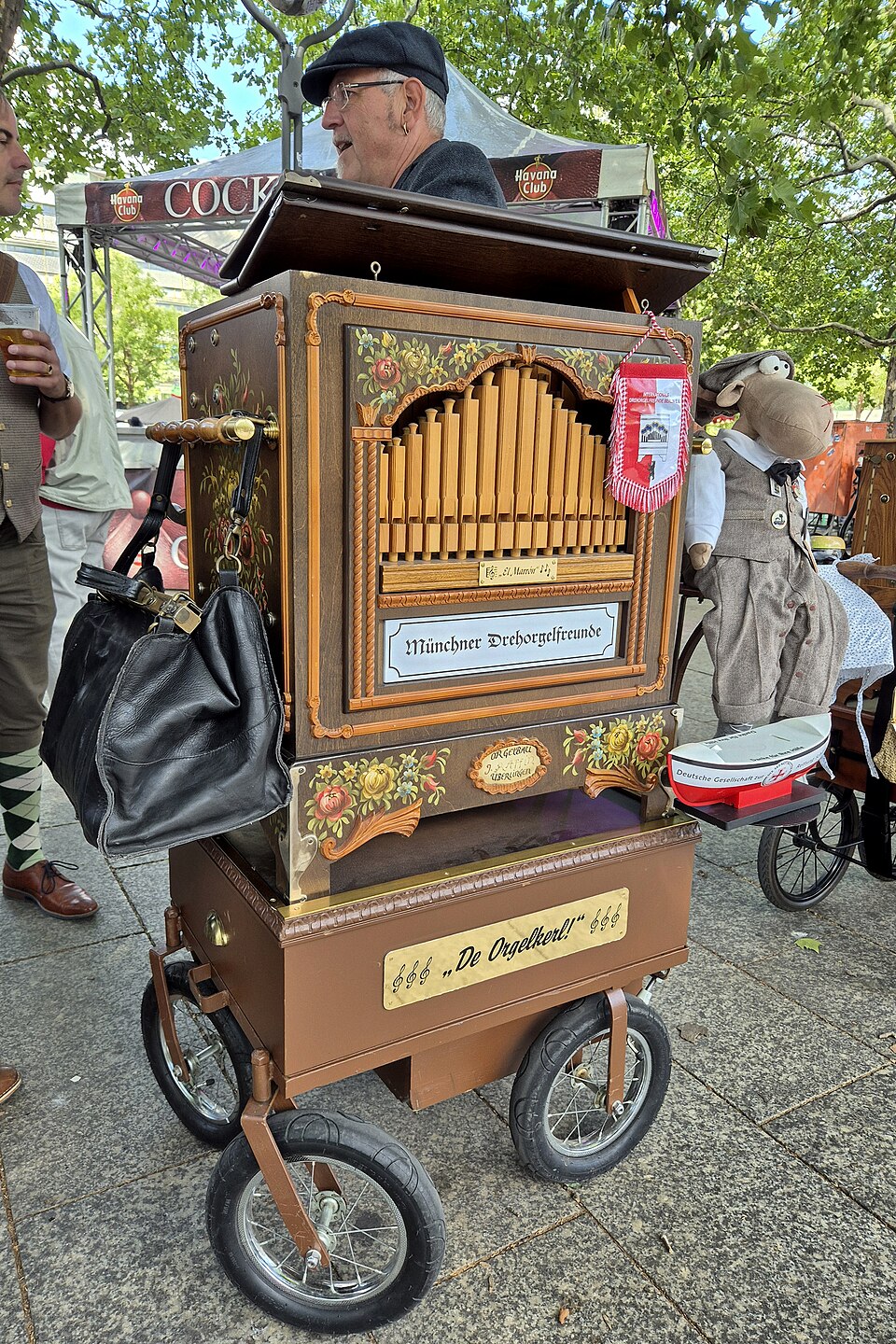
Among those living builders, two names recur through the modern busker world. Hofbauer Orgelbau, of Waldkirch, carried the drehorgel into the second half of the twentieth century: Carl Heinz Hofbauer qualified as Germany’s youngest master organ builder in 1955 and ran the firm from 1974 until his death in 2000, after which his widow continued production of crank and pipe organs (Fred Gerer, Carousel Organ, COAA). But the workshop that did most to define the modern small organ is Orgelbau Raffin. Josef Raffin established his workshop at Überlingen, on Lake Constance, in 1960, and from the 1970s concentrated on high-quality hand-cranked “busker” organs built to consistent, well-engineered scales (raffin.de, “History”). The Raffin 20-note and 31-note scales became de-facto standards: because Raffin sold both the organs and the punched music rolls to a fixed lane layout, arrangers and roll-cutters had, for the first time in the fragmented history of organ scales, a widely shared target to write for. The mechanical detail of that scale — its lane spacing and note assignment — is treated in the sibling Encoding the Music dive and the John Smith Universal build; the point for this history is that a small post-war workshop, not a golden-age giant, set the standard the modern hobby now revolves around.
7.5 The DIY revival: John Smith, the internet, and the amateur builder
The decisive modern turn was not a new instrument but a new builder. For its entire history the mechanical organ had been made by professionals — guarded scales, trade secrets, expensive tooling. What changed at the end of the twentieth century was that an amateur worked out how to build a real, good-sounding pipe organ from ordinary materials, without special woodworking or engineering skills, and then gave the plans away.
That amateur was John Smith, an English organ enthusiast who, in 1995, was asked by his grandson Daniel to make him an organ. Smith designed a small 20-note “Busker” organ — a lightweight, full-sounding pipe organ playing from a punched paper roll, in the spirit of the Victorian street organ — built from “bits and pieces” and, crucially, from everyday timber and hardware (johnsmithbusker.co.uk, “History”; melright.com). Requests to share the design followed, and Smith made the plans available; the deliberately uncritical, non-precision construction meant that “not only woodworking hobbyists but others with little experience could build their own organ.” His own account records buskers built by retirees, by “housewives working on the kitchen table,” and as school projects, and — once the plan package was sold over the internet — by “all manner of people all over the world.” A professional trade that had died as an industry was reborn as a global hobby.
The community that carries it. A design alone does not make a movement; the supporting ecosystem does. Around Smith’s plans grew a loose international community that supplies everything a builder needs beyond the organ itself. Melvyn Wright, an English arranger, runs “The Busker Organ Music Site” (melright.com) and supplies punched paper rolls arranged for the small scales, so a builder who cannot arrange music can still play a wide repertoire (melright.com). In the United States, figures such as Ed Gaida and forums including the Mechanical Music Digest spread plans, troubleshooting and encouragement, while COAA and FOPS rallies and the Waldkirch festival give finished instruments a public stage. The result is a self-sustaining loop: shared plans and shared scales → amateur builders → arrangers, forums and rallies → more builders. It is the same loop that the commercial trade once ran on a professional footing, reconstituted at hobby scale and, because the knowledge is now open rather than guarded, far harder to kill a second time.
And then MIDI. The most recent development folds the electronic era back into the old machine. A growing number of modern builders replace, or supplement, the paper roll with MIDI control — a solenoid or electro-pneumatic valve on each pipe, driven from a MIDI file — so that arranging becomes a matter of editing a file on a laptop rather than punching a physical roll. This is not a break with the tradition but its logical extension: as the sibling Encoding the Music dive argues, every medium in this history stores the same thing — a two-dimensional grid of pitch against time — and MIDI is simply that grid in electronic form. A MIDI busker organ is still a wind-blown pipe organ chosen by a separable stored program; only the program’s carrier has changed, from pinned barrel to folded book to paper roll to data file.
7.6 Where this program stands in the story
The lineage that this volume brings to the present does not end in a museum. It ends at a workbench. The modern DIY busker organ — a small, hand-cranked, 20-note pipe organ built from ordinary materials, playing from a punched roll or a MIDI file — is the direct, living descendant of every instrument in this series, and it is exactly what the rest of the Mechanical Organs program sets out to build and to arrange for. That places this program squarely in the ecosystem mapped above: it follows the John Smith 1995 design tradition, it arranges to the shared small-organ scale that Raffin’s workshop effectively standardised, and it draws on the same open community — Wright’s rolls, the forums, the rallies — that keeps the hobby alive.
There is a satisfying closure in this. The trade was destroyed, around 1930, by machines that let ordinary people summon music without a musician — radio, the gramophone, the sound film. A century later, the descendants of the very instruments those machines killed are being built, one at a time, by ordinary people who want to make the music themselves, mark by punched mark, exactly as a Georgian barrel-pinner and a Gavioli arranger did before them. The commercial reason for the mechanical organ is long gone and will not return. The human reason — the pleasure of a self-playing pipe organ turned by a crank on a street corner — turned out to be durable enough to outlast the industry that first supplied it, and to seed a hobby that this program is a small part of. The detailed build and arranging craft that carries the lineage forward is the subject of the sibling John Smith Universal and Encoding the Music dives; the consolidated timeline, who’s-who and bibliography close the history in Vol 8.
Sources
- Q. David Bowers, Encyclopedia of Automatic Musical Instruments (1972) — the standard account of the trade’s rise and its collapse under radio, recording and sound film.
- Musical Box Society International, “History” (mbsi.org/about/history) — founded 15 October 1949 as the Musical Box Hobbyists, Berlin Heights, Ohio; renamed 1953.
- Fair Organ Preservation Society, “Introduction” (fops.org) and University of Sheffield Library archive catalogue (archives.shef.ac.uk) — origin in the 1957 Bolton gatherings around Tom Alberts’ 98-key Marenghi; formally established 1958 (“established 1957”). Corrects the widely repeated “1963” (a conflation with the Musical Museum, Brentford).
- Carousel Organ Association of America — Ron Bopp, Carousel Organ journal (coaa.us); the association’s tenth anniversary was marked in 2008, placing its founding at c. 1997–98.
- Museum Speelklok, Utrecht, “History” (museumspeelklok.nl) — 1956 exhibition From Musical Box to Barrel Organ; museum opened 1958; moved to the Buurkerk 1984.
- The Musical Museum, Brentford — founded 1963 by Frank Holland (as the British Piano Museum); St Albans Organ Theatre — charitable trust formed 1978 from Charles Hart’s collection.
- Orgelbau Raffin GmbH, “History” (raffin.de) — Josef Raffin’s Überlingen workshop established 1960; the Raffin 20- and 31-note busker scales and rolls.
- Hofbauer Orgelbau — Fred Gerer, “Orgelbau-Meister Hofbauer,” Carousel Organ no. 28 (COAA); Carl Heinz Hofbauer, master 1955, ran the firm 1974–2000.
- Stadt Waldkirch (stadt-waldkirch.de) — the International Organ Festival (triennial); organ building in Waldkirch since 1799; Ignaz Bruder’s first street organ 1806.
- John Smith Organs (johnsmithbusker.co.uk) and Melvyn Wright, “The Busker Organ Music Site” (melright.com) — the 1995 busker design, the DIY plan package, and the arranged paper-roll supply.
- Wikipedia — Museum Speelklok, Musical Box Society International, Musical Museum, Brentford — for cross-checking dates.
Cross-references: the media grid (barrel · book · roll · MIDI) and the MIDI busker organ in the sibling Encoding the Music dive; the concrete 20-note build in the John Smith Universal dive. Within this series: the golden-age makers in Vol 5, the orchestrion and photoplayer cousins in Vol 6, and the consolidated reference, who’s-who and full timeline in Vol 8.
Comments (0)