John Smith Universal Organ · Volume 11
John Smith Universal — Vol 11: Music, Playing & Reference
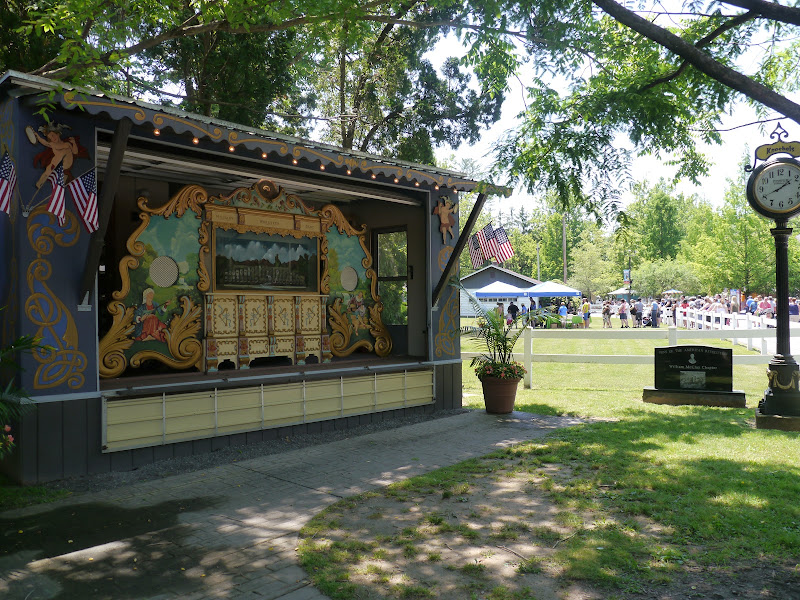
This final volume closes the series by answering the question a finished organ raises: now what does it play, and how? The first half is about the music — where rolls come from (bought ready-punched, punched at home from a paper master, or generated from MIDI), how one arranges for a fixed twenty-pitch palette, and how the instrument is actually played and busked in the tradition and the community it belongs to. The second half is the reference section the whole series has been building toward: a consolidated specification table, the scale/hole map (reconciled with Vol 03), a suppliers directory, a quick cross-index of Vols 01–10, and a de-duplicated bibliography. It introduces no new measurement; every value traces to the volume that established it, cited as “(Vol NN)”, with sources flagged (est.) where the origin volume flagged them.
Note: This volume treats the Universal as built to the Roll Cutter / johnsmithbusker.co.uk plans — a valved 20/26-note organ reading 110 mm commercial Raffin rolls (Beckman, Carousel Organ #31). Its valveless siblings (the Basic 20-Note / Busker and the Senior 20 on 140 mm rolls) are cross-noted where the distinction matters (Vol 01 §“The plan range”).
11.1 Where the music comes from
A hand-cranked organ is a read-only player: it has no keyboard and makes no music of its own. Every note it will ever sound is punched into a paper roll — the program — and the machine only reads. Four practical note-sources feed a Universal, and all four converge on the same 110 mm Raffin roll geometry (Vol 03 §“Where the music comes from”).
11.1.1 Ready-punched rolls
The shortest path to music is to buy rolls already cut. Because the Universal reads the commercial Raffin 20-note standard, its library is not proprietary: any standard 110 mm 20-note roll — new or second-hand — plays, as do rolls cut for Raffin, Hofbauer and Stüber 20ers (Beckman #31; thomas-sterk.nl). The community’s principal hobbyist source in the United States is Ed Gaida (edgaida.com), who punches and sells 20-note rolls and documents the John Smith organs photographically; Melvyn Wright (melright.com/busker) supplies arrangements and rolls in the United Kingdom, including 26-note rolls that exploit the six extra Alderman channels (Vol 03 §“The 26-note (Alderman) scale”). A 26-note organ plays plain 20-note rolls unaltered but sounds fuller on rolls punched specifically for 26 (Wright, melright.com/busker/jsmith26.htm).
11.1.2 Paper masters, punched at home
The cheaper route — and the one most builders grow their library on — is to punch blank stock from a paper master: a full-size printed template marking every perforation. Mel Wright and others publish masters that the builder lays over blank 110 mm roll paper and punches by hand, by punch jig, or by a small perforator (Wright, melright.com/busker). The arranging behind a master is done in software against the Raffin gamma — Wallace Venable’s 20-Raffin pitch/scale file (MIDI 53–86, 3 mm holes, 110 mm width, standard roll-speed and internote spacing) — so that a punched roll plays at the intended tempo (Venable, wallace-venable.name; Vol 03 §“Paper speed, tempo and the crank”).
Punching workflow and tools, in the order they are used:
- Arrange the tune into the 20-note (or 26-note) scale — transpose into the organ’s keys, fold the melody into the ten melody channels, voice bass and harmony below (see §“Arranging” and Vol 03 §“Arranging”).
- Lay out the master at true scale on the blank roll, registering the top edge of the paper to the tracker-bar datum so the perforations land on the channel centres (3.8 mm centre-to-centre on the 110 mm roll; Vol 03 §“Roll geometry”).
- Punch each note-slot with a hollow punch or perforator sized to the paper hole (≈ 3 mm), backing the paper to prevent tearing; a long note is a long slot (Vol 03 §“Roll as program”). A hand jig with a fixed fence keeps the lateral registration; accuracy is the whole game, since a walked row will not read.
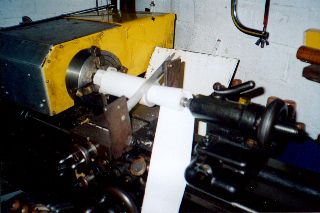
- Splice and spool — trim, join sections with the leader, and wind onto the take-up spool (the drivetrain that draws it is Vol 07 §7.2).
- Proof-play at cranking speed, marking mis-punches, ciphers (a slot that never closes and sounds continuously) and mistracks for correction.
11.1.3 The test roll
A short test roll is the tuner’s and setter-up’s instrument, not a musical one: it steps through each channel in turn, holding each note long enough to tune or voice against a reference, then sounds simple chords to check that ranks speak together and the wind holds under a full draw (Vol 10 §“First wind”). It is the first roll a finished organ reads, and it is punched (or bought) once and kept.
11.1.4 MIDI as a note-source
An arrangement authored as a MIDI file can be mapped to the twenty (or twenty-six) channels and either punched to paper or played directly by a MIDI-driven valve system that replaces the tracker bar with solenoids (Müller, haraldmmueller.de). The Universal as built to the plan is a paper instrument, but the same Raffin gamma underlies the electronic front-end — the gamma exists precisely to translate MIDI to the scale. The dedicated treatment of a solenoid-valved MIDI crank organ is the program’s Dive 7, “The MIDI-Driven 20-Note Crank Organ,” and the broader survey of encoding methods (barrel · book · roll · MIDI) is Dive 4, “Encoding the Music” (Vol 03 §“Where the music comes from”).
11.2 Arranging for the 20-note scale in practice
The Universal’s twenty channels resolve to just eight pitch classes — C, D, E♭, E, F, G, A, B♭ — which is an F-major scale (F G A B♭ C D E) plus an added E♭ (Vol 03 §“The Raffin 20-note scale”). Everything about arranging follows from that palette.
- F major is home; B♭ major is next door. With no B natural anywhere in the scale, C major is compromised — its leading tone is missing — so tunes in C, G or D (which want B♮, F♯ or C♯) are transposed down into F or B♭, or re-voiced to dodge the accidental (Vol 03 §“Arranging”). The added E♭ is the flat seventh of F, which supplies the C7 dominant colour and the modulation to B♭.
- The missing accidentals are the constraint. The 20-note scale can voice no F♯, C♯, G♯ or B♮ at all; a melody that leans on them is re-harmonised or has the note bent to the nearest available pitch — a deliberate, audible compromise. The 26-note Alderman extension relaxes this by adding F♯, C♯, D♯ (accidentals) and a bass D, letting arrangements keep more of their original chromatics and reach into sharp keys (Vol 03 §“The 26-note (Alderman) scale”).
- Oom-pah is the native texture. The three bass channels (F3, B♭3, C4) carry the “oom” on the beat; the middle octave carries the “pah” chords off the beat; the top ten channels carry the melody — three registers that keep any one channel from being asked to sound two notes at once, since two simultaneous notes cannot share a channel (Vol 03 §“Melody, accompaniment and bass”). Wide melodies are folded back an octave into the C5–D6 melody compass, usually inaudibly on a bright flute rank.
- Registration is a colour choice, not a note choice. The four stops (Vol 05 §“The four stops”) select which ranks sound the arranged notes, drawn at the chest, not per-note. A useful working palette: Rank 2 (stopped 8′) alone for a soft, sweet accompaniment; Rank 1 (open 8′) + Rank 3 (open 4′) for a bright full-organ tutti; the Rank 4 slightly-sharp rank drawn against a unison rank for a shimmering tremolo/celeste; and the optional glockenspiel added for sparkle on choruses — the percussion that “generates the most comments at rallies” (Beckman #31; Vol 05 §“The glockenspiel”). Because registration is set by hand, not punched, the same roll can be re-coloured performance to performance.
11.3 Playing and busking
11.3.1 Crank cadence sets tempo and dynamics together
On a roll organ, tempo is encoded as distance and read out at the speed the paper is drawn under the tracker bar — there is no independent speed control (Vol 03 §“Paper speed, tempo and the crank”). Because the single crankshaft drives both the feeders and the roll advance, crank cadence is one control doing two jobs at once: faster cranking speeds the music and pumps more wind (louder, firmer speech), while pitch stays fixed by the pipes — so, unlike a phonograph, hurrying never makes the tune go “chipmunk” (Vol 03; Vol 05). A comfortable busking cadence is roughly 55–65 rpm (≈ 1 rev·s⁻¹) (est.; Vol 07 §4), which draws the roll at about 24 mm·s⁻¹ at the start rising to ≈ 45 mm·s⁻¹ as the take-up spool builds up diameter (est.; Vol 07 §4). The player’s craft is a steady cadence — held by the feel of the crank and the ear on the tempo — trimmed slightly to hold tempo as the spool grows, not a fast one (Vol 07 §6.1). The spring-loaded reservoir buffers the pulses of the three 120°-spaced feeders so the wind stays smooth across the cadence (Vol 04 §“The reservoir”).
11.3.2 The busker / monkey-organ tradition
The Universal is the modern descendant of the Victorian street busker’s “monkey organ” — the small, portable, hand-cranked barrel-and-then-roll organ played for coins on a strap or a stand, historically (and apocryphally) with a monkey to work the crowd (Vol 01 §“The busker tradition”). John Smith’s whole design brief was to put that instrument back within reach of an amateur builder: buildable from readily-available materials for a target of about £75 in materials (Vol 01; Senger #24). The result is played standing, cranked with one hand, the other free to change stops or work the crowd — a performance instrument, not a museum piece.
11.3.3 Rallies and the community
The living community for these organs in North America is the Carousel Organ Association of America (COAA), whose rallies are where John Smith organs are played, compared and judged, and whose journal Carousel Organ is the single most important printed source for this series (the Beckman #31 and Senger #24–25 build articles both appeared there). Alongside it, the Musical Box Society International (MBSI) holds “grinds” and meets; the Busker Organ Forum (tapatalk.com/groups/buskerorgan) is the day-to-day online workshop where builders trade tracker-bar spacings, scale questions and roll sources. Ed Gaida and Melvyn Wright anchor the roll and arrangement supply; Wolfgang Brommer’s Hobby Crank Organ site is a parallel European hub (hobbycrankorgan.com).
11.4 Reference section
11.4.1 How the whole organ fits together (system recap)
The diagram consolidates the air path and drive train developed across Vols 02, 04, 06 and 07 into one page: the crank drives both the wind supply and the roll, the roll programs the valves, and the valves admit wind to the ranks.
11.4.2 Full specification
Table 1 — Full specification
| Parameter | Value | Source |
|---|---|---|
| Designer / origin | John Smith, Paignton, Devon, England; first organ 1995 (grandson Daniel’s request) | Vol 01; johnsmithbusker.co.uk; MMD |
| Type | Hand-cranked, paper-roll, valved busker pipe organ | Vol 01; Beckman #31 |
| Scales played | Raffin 20-note + Alderman 26-note (hence “Universal 20/26”; Beckman spells it “Aldeman”) | Vol 03; Beckman #31 |
| Distinct pitch classes (20-note) | 8 — C, D, E♭, E, F, G, A, B♭ (F major + added E♭); home key F major | Vol 03 |
| Compass (20-note) | F3 – D6, MIDI 53–86 | Vol 03; Venable gamma |
| Roll width | 110 mm (commercial Raffin standard; shared with 26-Note & Busker). Senior 20 uses 140 mm — not interchangeable | Vol 03; thomas-sterk.nl |
| Channel spacing on roll | ≈ 3.8 mm centre-to-centre; paper holes ≈ 3 mm | Vol 03; Müller; Venable |
| Tracker-bar holes | 4 mm (17 melody/accomp.) + 6 mm (3 bass); 4 mm-plus-slot bass revision available | Vol 03; Vol 06; Senger #24–25 |
| Melody ranks / stops | 4 — open flute 8′, stopped flute 8′, open flute 4′, front rank tuned slightly sharp (tremolo/celeste) | Vol 05; Beckman #31 |
| Bass pipes | 5 mitred bass (under skirt) + 5 bass “helpers” one octave up (on the bellows) | Vol 05; Beckman #31 |
| Percussion (optional) | Glockenspiel / xylophone in the base | Vol 05; Beckman #31 |
| Pipe count (26-note build) | ≈ 69 pipes | Beckman #31 |
| Pipe material | 1/8″ Baltic-birch ply pipes, walnut fronts (plans specify balsa; many use basswood); case 1/4″ Baltic ply | Vol 08; Beckman #31 |
| Wind supply | 3 feeder bellows, three-lobed crankshaft (lobes 120°), sprung reservoir + spill/relief valve | Vol 04; Beckman #31 |
| Operating pressure | 5 in H₂O = 127 mm H₂O ≈ 1.24 kPa | Vol 04; Senger #24–25 |
| Valve action | Paper hole → pillow-pouch swells → lifts poplar/leather valve (1/8″ brass stem); adjustable bleeds | Vol 06; Beckman #31 |
| Drive / rewind | Friction → idler → take-up-spool wheels; disengage lever for rewind/load; vacuum-cleaner belt tire | Vol 07; Beckman #31 |
| Crank cadence (busking) | ≈ 55–65 rpm (≈ 1 rev·s⁻¹) (est.); roll speed ≈ 24 → 45 mm·s⁻¹ across a roll (est.) | Vol 07 §4 |
| Part count | ≈ 800–901 (≈ 300 in the pipes, ≈ 200 in the pressure box) | Vol 08; Senger #24–25 |
| Materials cost | Target ≈ £75 (~$150); a documented build ran ≈ $439 with upgrades | Vol 01; Vol 08; Senger #25 |
11.4.3 Scale / hole map (Raffin 20-note; reconciled with Vol 03)
Pitch-ordered; A4 = 440 Hz reference. This is the authoritative Raffin gamma the Universal is drilled to; the lateral order across the paper is set by the Raffin roll standard, not simple low-to-high (Vol 03 §“Tracker-bar hole map”).
Table 2 — Scale / hole map (Raffin 20-note; reconciled with Vol 03)
| Hole | Note | MIDI | Freq (Hz, ET) | Role | Tracker hole |
|---|---|---|---|---|---|
| 1 | F3 | 53 | 174.61 | Bass | 6 mm |
| 2 | B♭3 | 58 | 233.08 | Bass | 6 mm |
| 3 | C4 | 60 | 261.63 | Bass | 6 mm |
| 4 | D4 | 62 | 293.66 | Accomp. | 4 mm |
| 5 | E♭4 | 63 | 311.13 | Accomp. | 4 mm |
| 6 | E4 | 64 | 329.63 | Accomp. | 4 mm |
| 7 | F4 | 65 | 349.23 | Accomp. | 4 mm |
| 8 | G4 | 67 | 392.00 | Accomp. | 4 mm |
| 9 | A4 | 69 | 440.00 | Accomp. | 4 mm |
| 10 | B♭4 | 70 | 466.16 | Accomp. | 4 mm |
| 11 | C5 | 72 | 523.25 | Melody | 4 mm |
| 12 | D5 | 74 | 587.33 | Melody | 4 mm |
| 13 | E♭5 | 75 | 622.25 | Melody | 4 mm |
| 14 | E5 | 76 | 659.26 | Melody | 4 mm |
| 15 | F5 | 77 | 698.46 | Melody | 4 mm |
| 16 | G5 | 79 | 783.99 | Melody | 4 mm |
| 17 | A5 | 81 | 880.00 | Melody | 4 mm |
| 18 | B♭5 | 82 | 932.33 | Melody | 4 mm |
| 19 | C6 | 84 | 1046.50 | Melody | 4 mm |
| 20 | D6 | 86 | 1174.66 | Melody | 4 mm |
The 26-note Alderman scale keeps all twenty holes in place and adds six in the roll margins — bass D; accomp. F♯; melody F♯, C♯, D♯/E♭, A♯ — so old 20-note rolls still play (Vol 03 §“The 26-note (Alderman) scale”; Beckman #31; MMD 1997.08.29).
11.4.4 Suppliers and community sources
Table 3 — Suppliers and community sources
| Source | Supplies | Reference |
|---|---|---|
| Roll Cutter | Plans + ready-made parts (tracker bar, crankshaft, turned wheels, leather, tubing, springs); John Smith’s US agent | rollcutter.com |
| John Smith Organs | The plans, “Guide to Improvements,” history | johnsmithbusker.co.uk |
| Columbia Organ Leathers | Bellows/valve leather (CPL Gusset Medium; CGL Valve-Heavy), fish glue | columbiaorgan.com |
| National Balsa | Balsa for pipes/pipe cores per John Smith’s original spec | nationalbalsa.com |
| Ed Gaida | Punched 20-note rolls; John Smith organ photos/documentation | edgaida.com |
| Melvyn (Mel) Wright | Arrangements, paper masters, 20- and 26-note rolls, build tips | melright.com/busker |
| TUNE!IT (Detlef Volkmer) | Tuning software (microphone + manometer voicing rig) | Vol 10; TUNE!IT |
| Hobby Crank Organ (W. Brommer) | European builder hub, parts and guidance | hobbycrankorgan.com |
| COAA / MBSI | Rallies, grinds, the Carousel Organ journal | coaa.us; mbsi.org |
| Busker Organ Forum | Builder Q&A, scale/spacing, roll sources | tapatalk.com/groups/buskerorgan |
11.4.5 Quick cross-index — the eleven volumes
Table 4 — Quick cross-index — the eleven volumes
| Vol | Title | Covers |
|---|---|---|
| 01 | Overview & History | What the Universal is; John Smith of Paignton; the plan range (Busker, Senior 20, Universal, Topsy); “20/26”; busker tradition |
| 02 | Theory of Operation | End-to-end air path; the roll as program; valved vs valveless; block diagram |
| 03 | The Scales & Musical Design | Raffin 20 + Alderman 26 note layouts; 110 mm roll; hole map; arranging basics; roll vs MIDI |
| 04 | Wind System | Feeder bellows, 120° three-lobe crankshaft, reservoir, spring, spill valve, manometer, ~5 in H₂O |
| 05 | Pipework & the Four Stops | Open/stopped flue pipes, languid/cut-up, the four ranks, bass pipes + helpers, glockenspiel |
| 06 | Pressure Box, Tracker Bar & Valves | The backbone box, tracker bar (4/6 mm, jig), pillow-pouch valve action, bleeds |
| 07 | Drivetrain & Roll Transport | Crank, friction/idler/take-up wheels, rewind/disengage, belts, cadence/tempo coupling |
| 08 | Materials, Tools & Cutting | Balsa vs basswood vs Baltic ply, leather, glues, the “readily available” ethos, ~800 parts, cut planning |
| 09 | Assembly Sequence | Realistic build order, airtightness/sealing, trial fit, interference fixes |
| 10 | Setup, Voicing & Tuning | First wind, leak chasing, voicing flue pipes, the tremolo rank, the temperament rig |
| 11 | Music, Playing & Reference | (this volume) rolls, arranging, busking/rallies, specs, hole map, suppliers, bibliography |
11.4.6 Bibliography
Consolidated and de-duplicated from Vols 01–10.
- H. C. Beckman, “John Smith Universal (20-26) Organ,” Carousel Organ #31 (COAA) — the Universal name and 20/26 rationale, 110 mm rolls, four stops, five bass + helpers, glockenspiel, ~69 pipes, valve action, three-feeder wind.
- Paul Senger, “Building the John Smith Organ,” Carousel Organ #24–25 (COAA) — valveless Basic build, 5 in H₂O working pressure and manometer, pressure-box “backbone,” tracker 4/6 mm holes and the 4 mm-plus-slot revision, pipe scaling, part count and cost, John Smith’s readily-available-materials list.
- Melvyn Wright, melright.com/busker (jsmith.htm, jsart20.htm, jsmith26.htm, raffin.htm) — Raffin 20-note standard, tracker-bar notes, the Alderman 26-note scale (Ian Alderman / Roy Davis of Poole), paper masters, rolls, build tips.
- Ed Gaida, edgaida.com — punched 20-note rolls and John Smith organ photos.
- Wallace Venable, 20-Raffin gamma file, wallace-venable.name — authoritative Raffin pitch list (MIDI 53–86), 3 mm holes, 110 mm width, roll-speed and internote parameters for arranging.
- Thomas Sterk Arrangementen, thomas-sterk.nl — 110 mm Raffin vs 140 mm John Smith / Castlewood roll standards; interchangeable-maker note.
- Harald M. Müller, haraldmmueller.de/midi_en.htm — 20er tracker spacing (≈ 3.8 mm); MIDI-to-channel mapping.
- John Smith Organs, johnsmithbusker.co.uk (and /universal.html, /History) — the plans, origin story (1995, grandson Daniel), “Guide to Improvements.”
- Roll Cutter, rollcutter.com — plans and ready-made parts (US agent).
- Mechanical Music Digest, mmdigest.com, 1997.08.29 — 20-note vs 26-note scale; the six added Alderman notes; scale history.
- Busker Organ Forum, tapatalk.com/groups/buskerorgan — tracker-bar spacing, Raffin-scale questions, roll sources.
- COAA, coaa.us; MBSI, mbsi.org — rallies/grinds and the Carousel Organ journal that carries the Beckman and Senger articles.
- Hobby Crank Organ, hobbycrankorgan.com (Wolfgang Brommer) — parallel European builder resource.
- Columbia Organ Leathers, columbiaorgan.com — bellows and valve leather, fish glue. TUNE!IT (Detlef Volkmer) — voicing/tuning software (Vol 10).
11.5 Beyond the Universal — the Mechanical Organs program
This eleven-volume deep dive is dive 5 of the Mechanical Organs program; the
Universal is one build among a wider study of mechanical organs. The sibling dives
place it in context (see ../README.md):
- Track 1 — Foundations & Theory: A History of Mechanical Organs (dive 1), How Organ Pipes Make Sound (dive 2, the flue-pipe acoustics behind Vol 05), Wind Systems (dive 3, the wind theory behind Vol 04), and Encoding the Music — barrels · books · rolls · MIDI (dive 4, the encoding survey behind Vol 03).
- Track 2 — The Builds: The Four-Register Crank Organ (dive 6), The MIDI-Driven 20-Note Crank Organ (dive 7, the solenoid-valve alternative to this organ’s tracker bar), and The Hobby Crank Organ (Brommer) (dive 8).
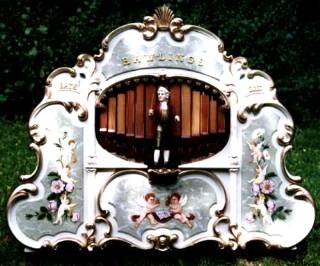
- Track 3 — Construction Craft: Building Organ Pipes (dive 9), Tuning & Voicing (dive 10, the craft behind Vol 10 here), The Case, Façade & Figures (dive 11, the decoration the finished-organ figure shows), and Materials, Construction & Restoration — Classic and Modern (dive 15).
- Track 4 — Drive & Grand Variants: Turning the Crank: Hand, Electric Motor & Automation (dive 12), Steam Organs & Calliopes (dive 13), and Fairground & Dutch Street Organs (dive 14) — where the hand-cranked busker organ scales up into the grand mechanical organs of the fairground.
Cross-references: the end-to-end air path Vol 02; the scale, hole map and arranging Vol 03; the wind system and ~5 in H₂O regulation Vol 04; the four stops, bass and glockenspiel Vol 05; the tracker bar and valve action Vol 06; the drivetrain and cadence-tempo coupling Vol 07; materials, tools and part count Vol 08; assembly Vol 09; setup, voicing and tuning Vol 10. Program-level: Dive 4 (Encoding the Music) and Dive 7 (MIDI- Driven Crank Organ) for the note-source and solenoid paths.
Comments (0)